There are a lot of questions and apprehensions for first-time students in showing rabbits. These questions might range from how to select my bunny, how to care for it to how do I posture it before the judge. Hopefully this section will help answer some of those questions.
BREEDS
To begin, let's identify the type of rabbit you want to show. We will consider Californians and New Zealands. Others may be acceptable, but these two breeds are the dominate choices and are breeds sold by Little Creek Farms.
CALIFORNIAN: 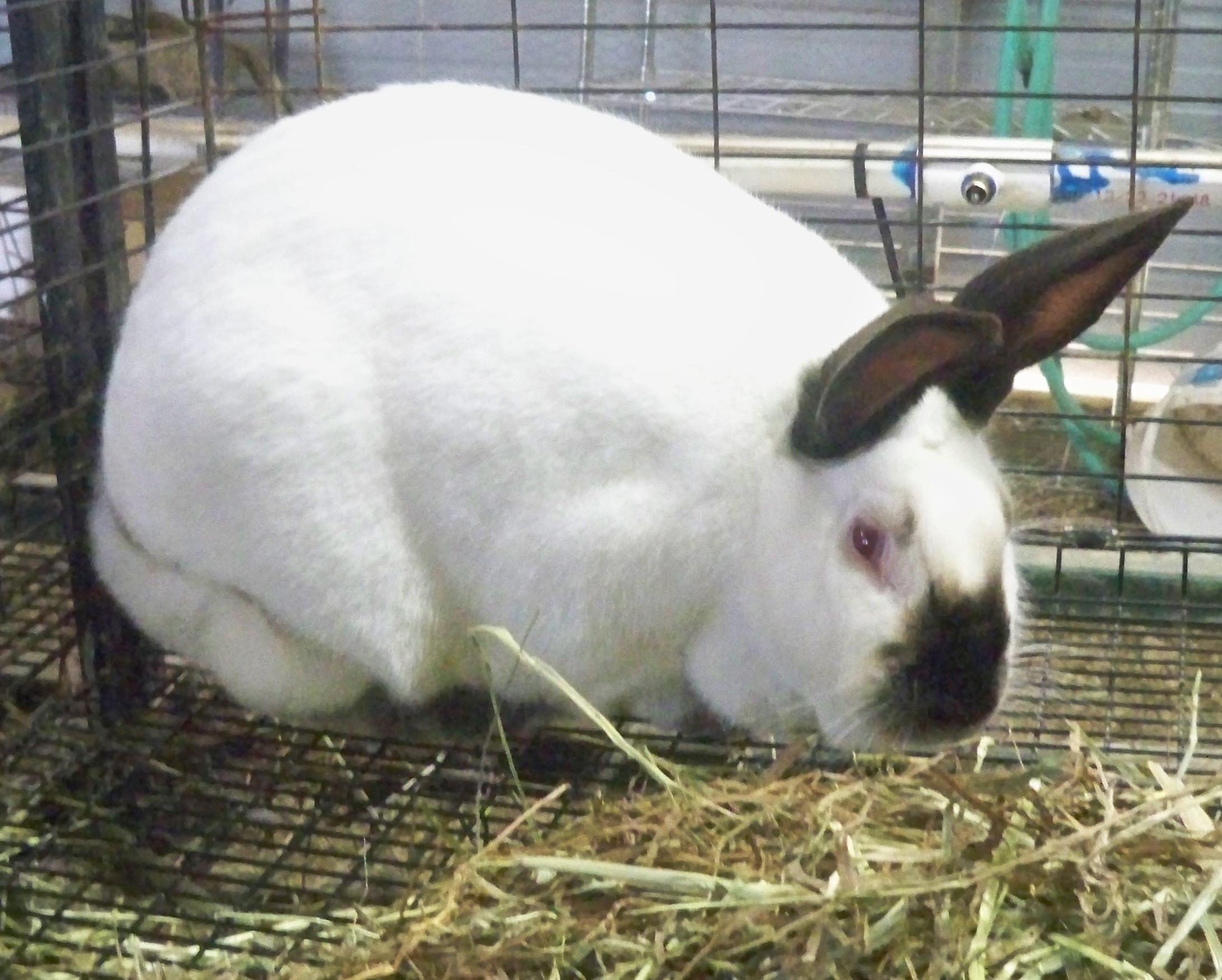
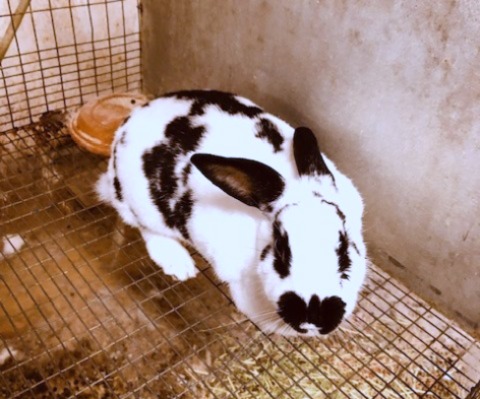
The Californian is a white rabbit with black ears, feet, tail and nose. See more information about this breed in the Farm Tour section of this site.
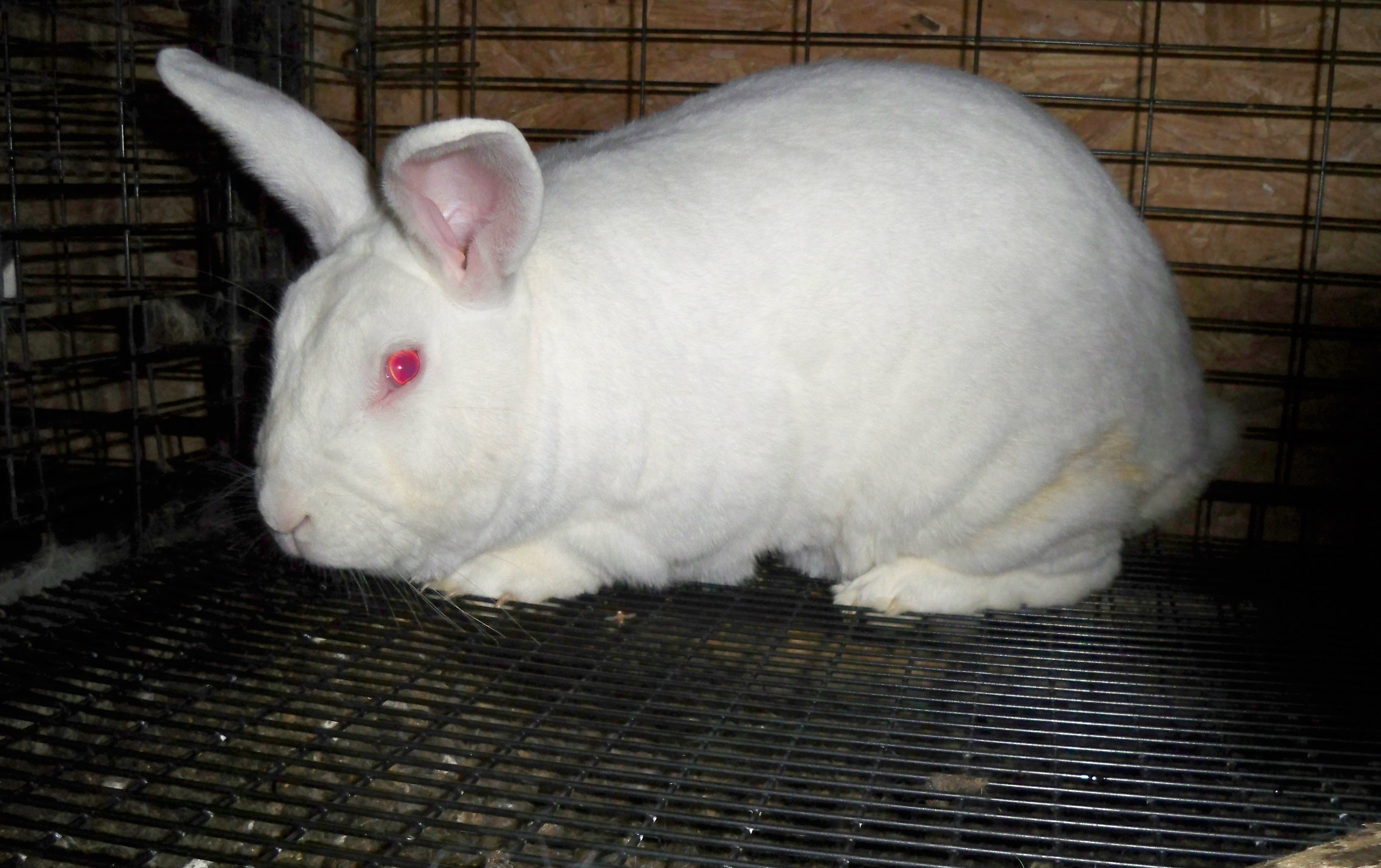
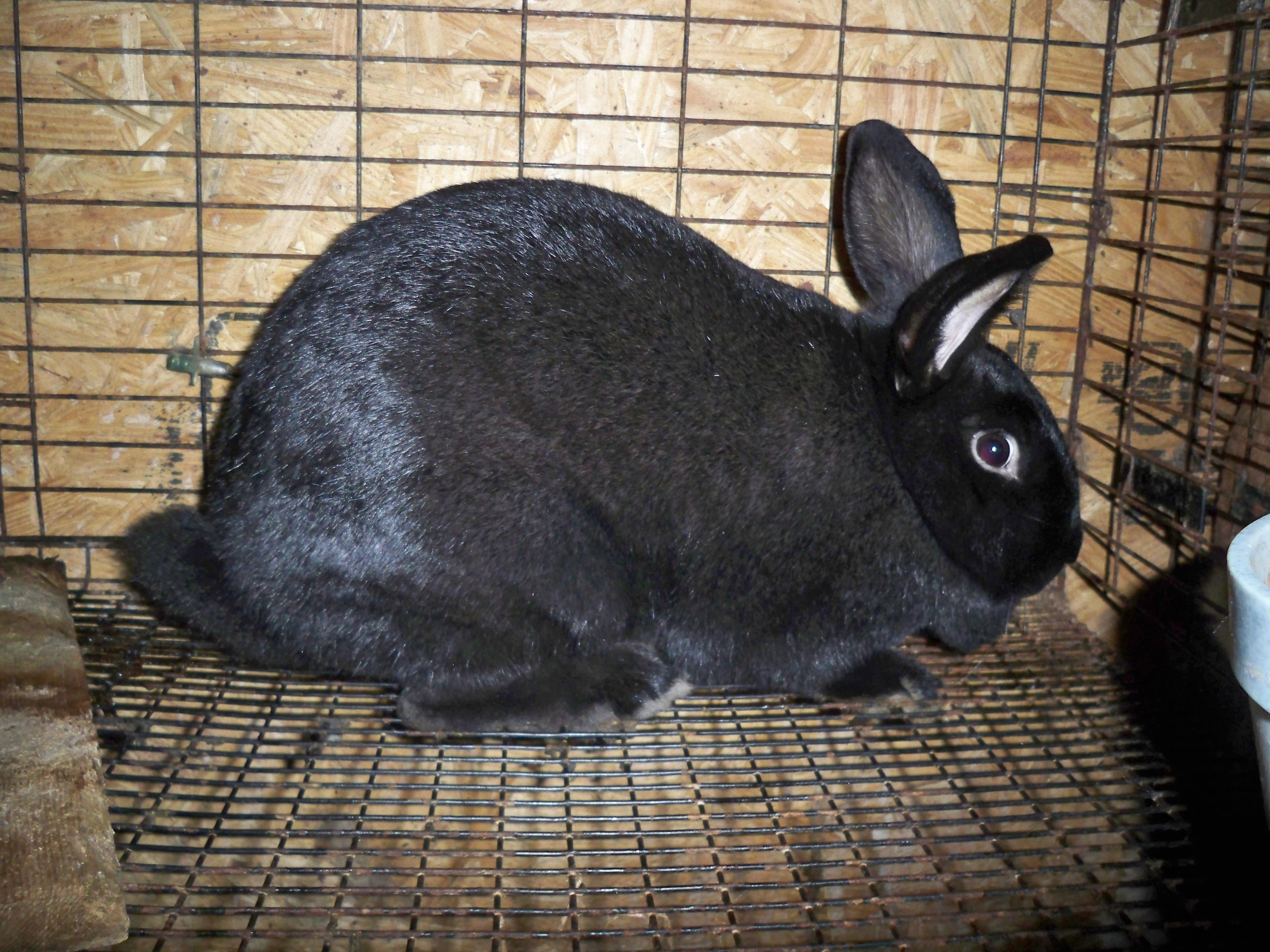
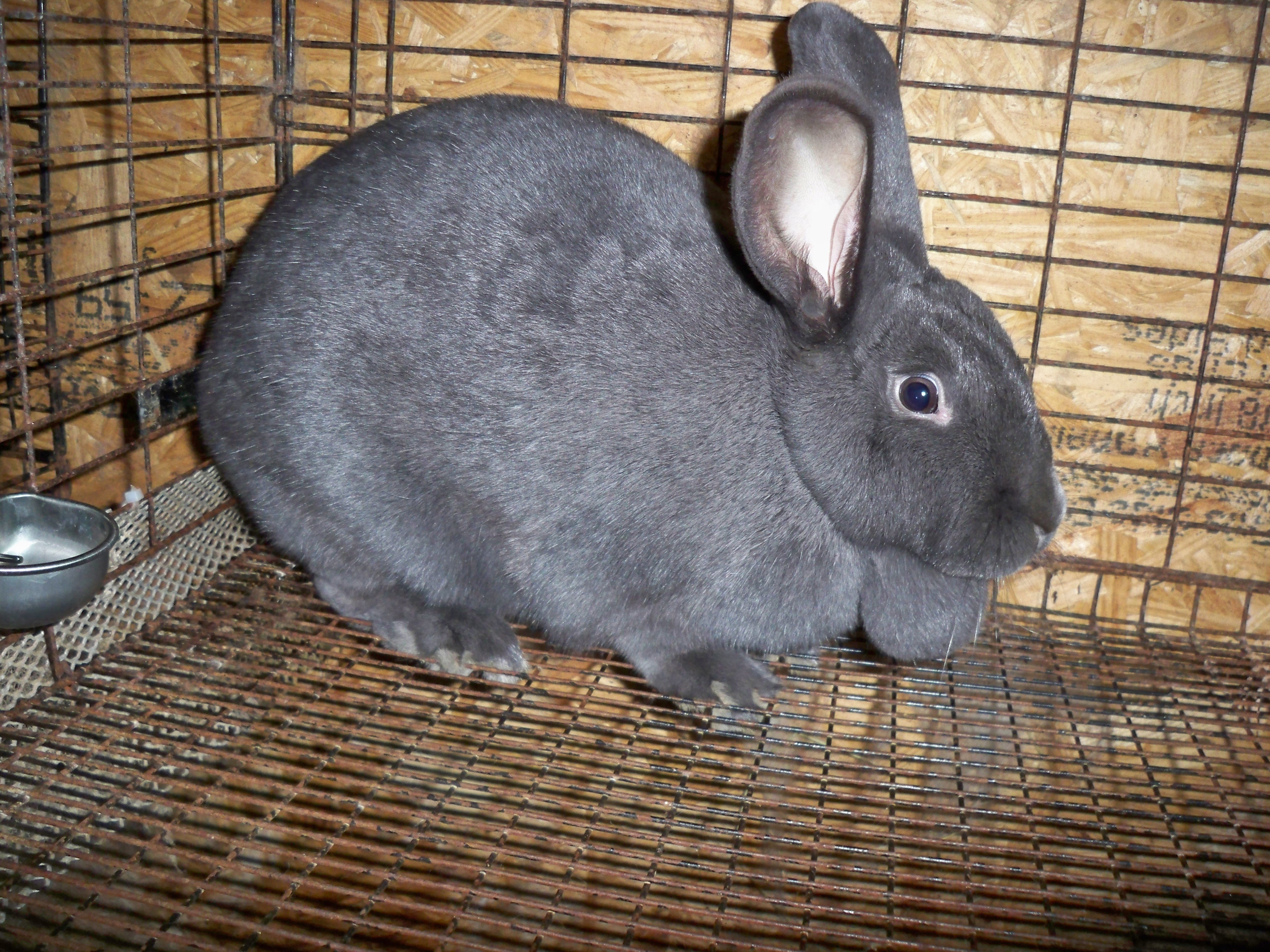
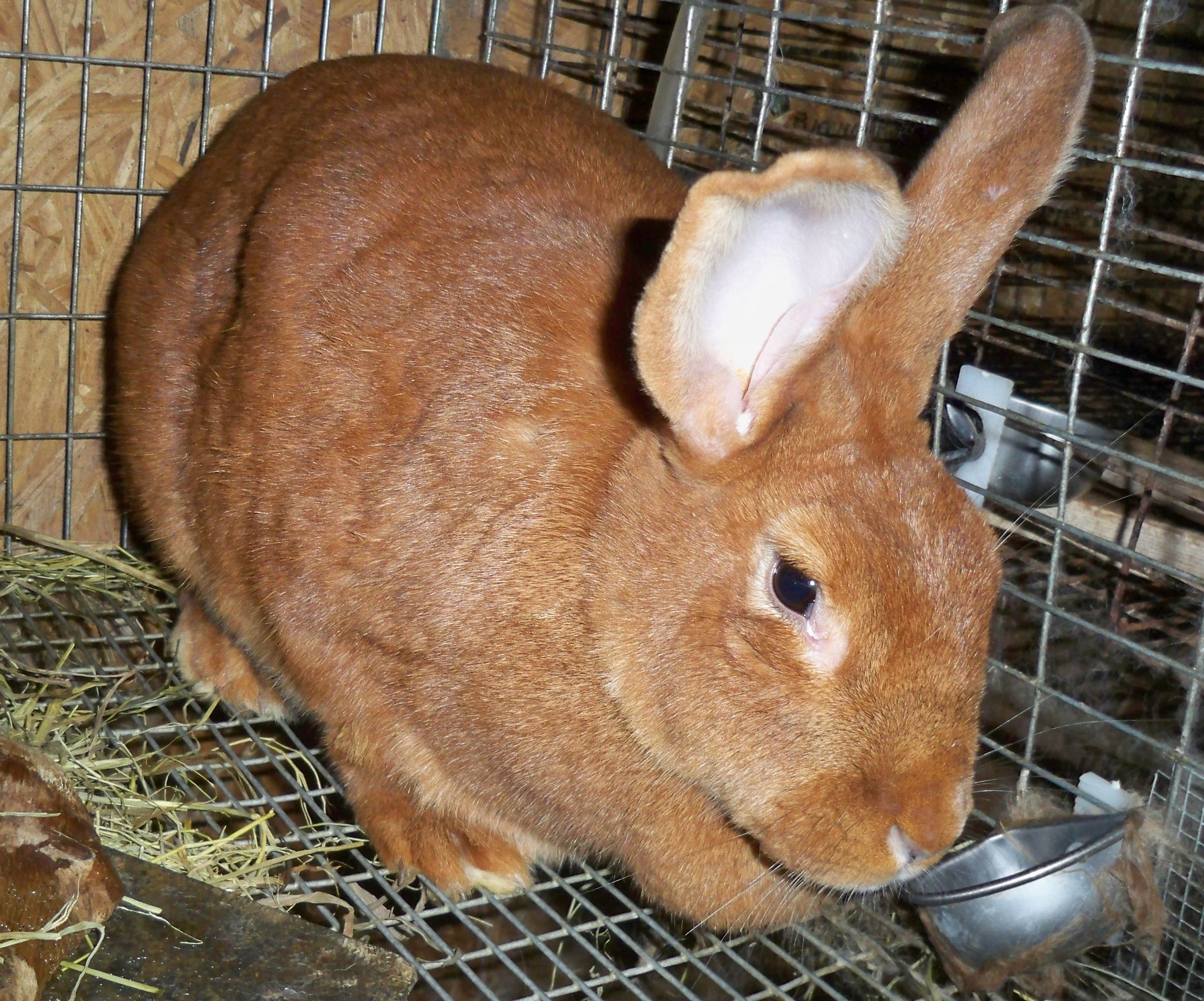
NEW ZEALAND: The New Zealand has become a popular choice for meat pen shows because of the compact muscle structure but also for their varity of colors. They come in white, black, blue, red, and broken. See more information about this breed in the Farm Tour section of this site.
STANDARDS:
Now that we have identified the various types of rabbits, we will not consider the America Rabbit Breeders Association (ARBA) standards for these breeds. While all local shows may not require these standards, many do and they provide a good guide line in determining your rabbit.
ARBA Standards:
CALIFORNIAN:
The Californian is characterized by a white body with dark "points" (ears, nose, feet, tail) and a flyback coat. For a meat pen show, the size and weight should meet local show requirements. Key judging points emphasize a 65-point body type (broad, firm, well-muscled) and 20-point fur.
Body type (65 points): The body should taper from wide shoulders to deeper, broader, and well-rounded hindquarters.
Color & Markings: Pure white body with dark chocolate to black markings on the nose, ears, feed, and tail. Eyes are to be pink.
Fur (20 points): Dense, with a good flyback coat that is not too soft or coarse.
Head/Ears: Well-shaped, medium-full head with ears carried in an upright position.
Disqualification:
White Mark: A white spot in the dark markings.
Sore Hocks: Signs of infection or bleeding on the feet.
Tumor or Abnormal Swelling: Any swollen lump on the body.
NEW ZEALAND:
A New Zealand rabbit show judge looks for a compact, muscular, and commercial-type body with equal width and depth, featuring a slight taper from shoulders to hips. Key focus areas include firm flesh, dense, straight-standing fur (white preferred for purebreds), and a healthy, well-groomed condition. Disqualifications include malocclusion, wrong eye/nail color, or ear cankers.
Key Evaluated Features:
Body Type (Commercial): A well-rounded, firm, and muscular body is essential, with a deep, broad chest. We suggest that the rabbit, when properly set, should look like a basketball.
Weight & Size: Must meet specific breed weight requirements for their age class (senior, intermediate, or junior).
Fur Quality: The coat should be dense, with good rollback and not too soft or too harsh.
Color: For white New Zealands, the coat must be pure white. Other recognized colors include red, black, and blue. The colored rabbits should be solid in their respectived color with no additional color markings. New Zealand brokens have special color requirements that are considered below.
Condition: The rabbit must be in prime condition, not overweight, and free of molt.
Health Checks: Judges look for signs of illness or parasites, including clean ears (no canker), straight legs, and proper tail.
Tattoo: Must have a legible tattoo in the left ear. For local shows, this is usually done at validation.
NEW ZEALAND BROKEN
The (ARBA) standard for a Broken New Zealand requires balanced patches of color (10-70% of the rabbit's body) and white, with evenly colored ears and white-colored front feet. The colored fur should appear as a blanket or patch pattern, with white fur in between, and the fur around the eye should be the appropriate color for the rabbit, uninterrupted by white.
Key Points for ARBA Broken New Zealands
- Color Pattern: The rabbit should have a combination of color and white.
- Color Percentage: The colored portions of the fur should account for 10% to 70% of the total body.
- Color Balance: The colored markings should be evenly balanced on the body.
- Pattern Type: The colored and white areas can be in a "patched" or "blanketed" pattern.
- Ears: Both ears must be completely colored, not white.
- Front Feet: The front feet should be white.
- Eyes: The fur directly around the eye should be the correct color, without any white.
Common Reasons for Disqualification:
Malocclusion: Teeth that do not meet properly
Physical Faults: Broken tails, white spots on colored rabbits, wrong eye color, or missing toenails.
Illness: Canker in ears, runny eyes, or signs of disease.
Once you have your rabbits, now the work begins. There is the essential care for the bunnies (food, water, shelter, etc.). In additon, there are records to maintain. You will need to log expenses such as feed, special needs (i.e fans, heaters, cages, etc). In addition you should keep a log of the growth rate of you rabbits. Your show rabbits should be within a few ounces of one another and within your weight guidelines at show time. Scales that register pounds and ounces is a must.
Then there is hands on. You need to handle your rabbits and get them accustomed to "setting" for the judge. (reference "Posture" below with pictures). This is a critical area in showmanship. Also during the show, should the judge ask you questions, look them in the eye and answer with confidance.
POSTURE:
Josh Humphries has been raising rabbits since 1994 and became a ARBA licensed judge in 2001. He has been an ARBA district director and is a current member of the ARBA Standards Committee. He says that the most common area of criticism from both judges and exhibitors alike is inconsistent or improper posing. "Too many good animals are culled because they are improperly posed. In addition too many culls are kept for the same reason."
Simply stated: If your animal is not properly posed, you cannot properly evaluate the body type. Overposing, is the most common posing fault. It distorts the animal creating the illusion of depth but causes the animal to slide off the hindquarter. Underposing can make the animal appear to have a fuller hindquarter, but also creates the illusion of length and lacking in depth.
Californian and New Zealand rabbits will have a slight taper from the shoulder to the hips when viewed from above. Since commercial type rabbits are primarily raised for meat, a firmness of flesh and fullness of body are particularly important. The animal should present a smooth appearance throughout.
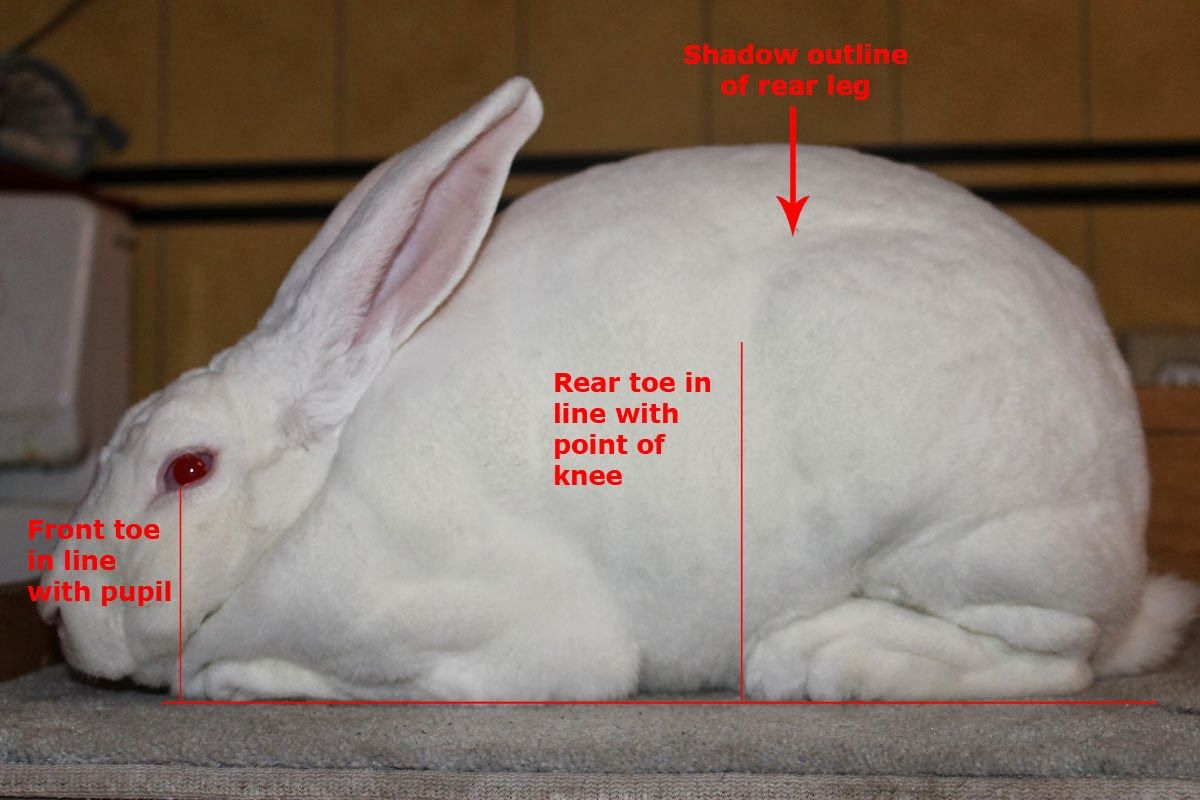
Correctly Posed
When correctly posed, your bunny should have the look of a basketball. With the toes of the back leg aligned with the front of the hip, and the front feet directly under the eye, this animal is posed correctly and ready for evaluation.
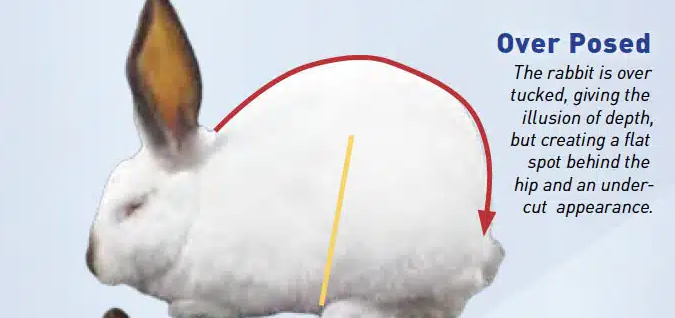 Over Posed
Over posing the rabbit is the opposite extreme of under posing. The rabbit is over tucked and gives the the illusion of depth. But this position creates a flat spot behind the hip and an undercut appearance.
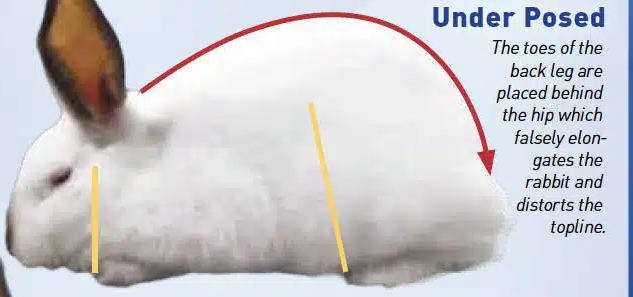
Under Posed
Under posing is setting your rabbit with its back leg toes are placed behind the hip instead of in alignment with the hip. This falsely elongates the rabbit and distorts the topline and give the appearance of a “drop-off” in the rump area..
MONITORING GROWTH:
In preparing your rabbits for show, regularing monitoring is necessary. The following information is a general guided that should help you in determing how well your bunnies are on track.
NEW BORN KITS:
New born kits are entirely dependent on their mother (doe). They are born hairless, blind, and deaf.
Key Developments:
Feeding: Only mother’s milk (colostrum in the first 24 hours is crucial for immunity).
Behavior: Kits stay huddled for warmth; movement is minimal.
Survival Check: Ensure all kits are nursing (full, round bellies indicate proper feeding).
Care Tips:
Keep the nesting box clean and dry.
Monitor doe’s milk supply—if kits appear weak, supplemental feeding may be needed.
Supplement mother’s diet with high protein additives like calf manna or oat meal.
Week 2: 8-14 days Weight: 5 oz. - 8 oz
Kits begin developing fur and their ear canals open.
Key Developments:
Eyes Open: Around 10 –12 days.
Movement: Start crawling but remain in the nest.
Feeding: Still exclusively milk-fed.
Care Tips:
Check for eye infections (common if bedding is dirty).
Ensure the nest stays warm—avoid drafts.
Week 3: 15-21 days Weight: 8 oz. - 14 oz
Kits become more active and start exploring outside the nest.
Key Developments:
Weaning Prep: Begin nibbling on hay/pellets (though milk is still primary).
Behavior: Playful hopping, social interaction with litter mates.
Feeding Transition:
Introduce alfalfa hay, Timothy Grass, or Orchard Grass and starter pellets (16% to 18% protein).
Fresh water should always be available in shallow dishes.
Care Tips:
Watch for diarrhea (coccidiosis risk increases with solid food introduction. Should this occur, remove pellets and retain a grass only diet. In addition, Corid could be added to the bunnies water supply..
Week 4: 22-28 days Weight: 14 oz. - 1.2 lbs
This is a critical week as kits start weaning.
Key Developments:
Weaning Begins: Kits still nurse but eat more solids.
Growth Spurt: Rapid muscle and bone development.
Feeding :
High-protein pellets (16–18%).
Unlimited alfalfa hay or Timothy grass for fiber and calcium.
Care Tips:
Monitor weight—slow growers may need supplemental feeding.
Week 5: 29-35 days Weight: 1.2 lb. - 1.8 lbs
Kits are now fully weaned or close to it.
Key Developments:
Independent Eating: No longer reliant on milk.
Social Hierarchy: Dominant kits may eat more—ensure equal access to food.
Feeding :
- Continue high-protein pellets and grass fiber
Care Tips:
Weigh kits weekly to track growth.
Separate by size if competition for food is an issue.
Week 6:36-42 days Weight: 1.8 lb. - 2.4 lbs
Growth rate peaks—this is when feed efficiency is highest.
Key Developments:
Muscle Build-Up: Meat breeds gain ~0.75 to 1 oz/day.
Behavior: Highly active, playful, and curious.
Feeding :
Free-choice pellets (16% protein).
Unlimited hay
Care Tips:
Watch for overgrown teeth (provide chew toys or wooden blocks).
Week 7:43-49 days Weight: 2.4 lb. - 3.2 lbs
Most meat rabbits reach fryer weight (3 lb – 4 lb) by 8–10 weeks.
Key Developments:
Slower Growth: Feed efficiency declines slightly.
Sexual Maturity Signs: Bucks may start mounting.
Feeding :
Reduce protein slightly (14–16%) if nearing show weight.
Avoid obesity—Reduce pellets and increase grass fiber if weight gain is too rapid.
Care Tips:
Separate males and females if keeping past 10 weeks.
Week 8:50-57 days Weight: 3.2 lbs - 4.4 lbs
Rabbits should be approaching show weight. Make adjustments to diet as necessary
Key Developments:
Muscle tone should be developed
Feeding :
If weight is in line, then maintain consistent pellet amount (4 oz/day per rabbit).
Avoid (or limit) treats to prevent fat buildup.
Care Tips:
Check for proper muscling before show. Consider raising food dish to force bunny to stand on back legs to eat, thus building muscle, or provide a rabbit run for exercise
Week 9:57 - 84 days Weight: 4.4 lbs - 5.5 lbs
Reaches show size
Key Developments:
Growth Slows: Requires more feed per pound gained.
Fat Deposition: Excess fat can affect show quality.
Feeding :
Adjust to maintenance pellets (14% protein).
Increase fiber (grass hay) to prevent obesity.
Growth Chart Summary Table
Week | Avg. Weight | Key Milestones | Feeding Focus |
|---|---|---|---|
1 | 1.3 oz – 3 oz | Blind, deaf, milk-only | Mother’s milk |
2 | 3 oz – 8 oz | Eyes open, fur growth | Milk only |
3 | 8 oz – 14 oz | Starts nibbling solids | Introduce pellets & hay |
4 | 14 oz – 1.2 lb | Weaning begins | High-quality pellets |
5 | 1.2 lb – 1.8 lb | Fully weaned | Unlimited pellets + hay |
6 | 1.8 lb – 2.4 lb | Rapid muscle growth | Free-choice pellets |
7 | 2.4 lb – 3.2 lb | Fryer weight reached | Adjust protein (16%) |
8 | 3.2 lb – 4.4 lb | Ideal harvest time (fryer) | Controlled portions |
9–12 | 4.4 lb – 5.5 lb | Roaster size | More hay, fewer pellets |
Factors Affecting Growth Rate
Genetics: Meat breeds grow faster than dwarfs or pets.
Diet: High-protein feed accelerates growth.
Health: Parasites or illness stunt growth.
Environment: Stress (heat, overcrowding) slows development.
I hope this article was helpful and you have a wonderful show experience. Feel free to contact Little Creek Farms Rabbitry with questions and/or concerns (903-860-7511).